

Granite setts are among the most hard-wearing surfaces you can lay, and one of the few that genuinely improves with age. Whether you're planning a driveway that has to take the family car, a courtyard, a garden path or a crisp decorative border, the setts you choose will set the character of that space for decades. As with any natural stone, it's less about finding one ‘best’ sett and more about matching the right size, finish and depth to the job in hand.
At Caradon Stone, much of our granite comes straight from our own Cornish quarries, and our team — which includes a qualified geologist — helps people make that choice every day. This guide walks through everything worth thinking about before you buy.
What are granite setts?
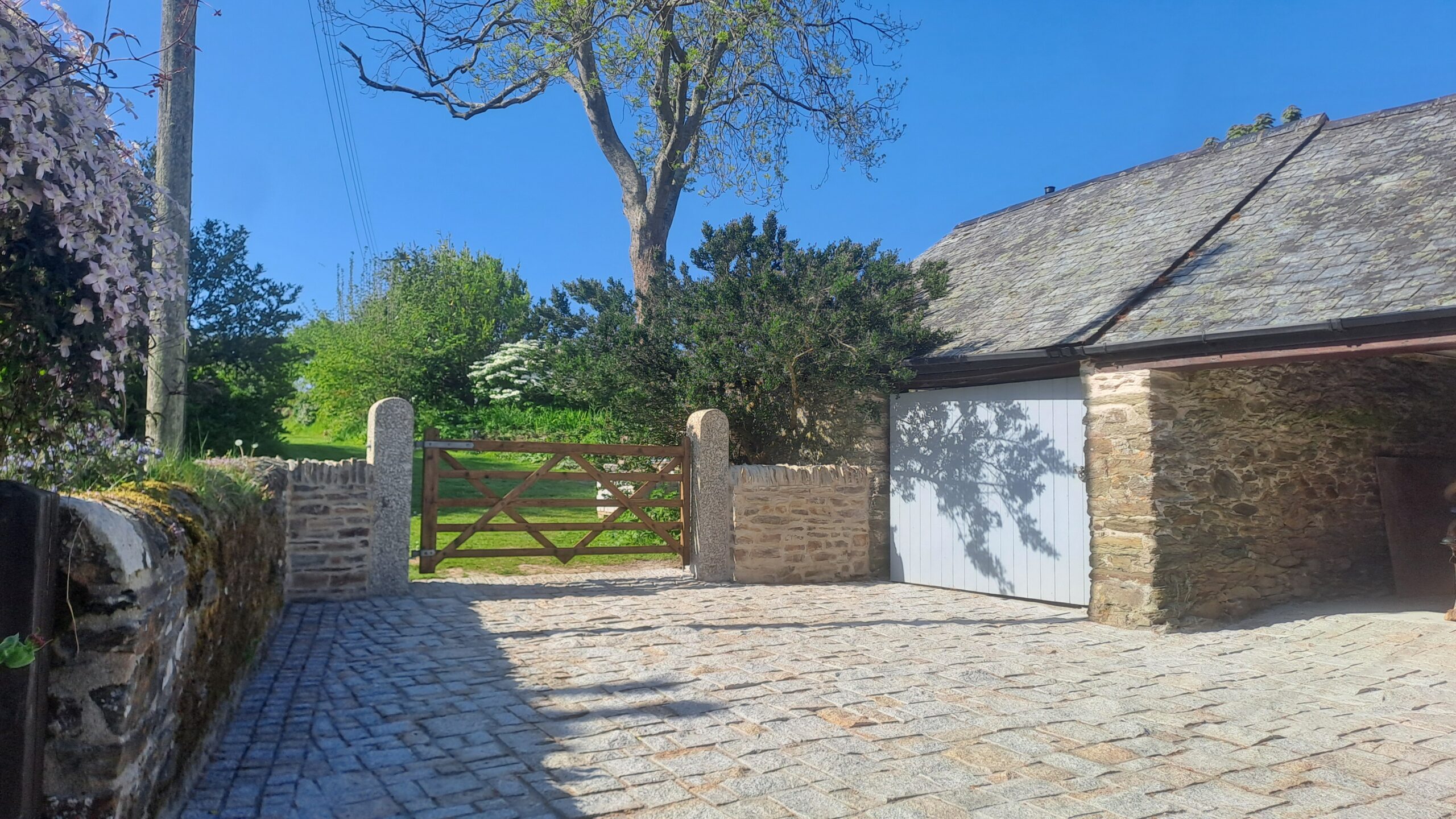
Setts are small, roughly rectangular blocks of natural stone, traditionally used to pave streets and courtyards long before concrete and tarmac arrived. Granite setts are the most durable of all: dense, weather-resistant and almost indifferent to frost, traffic and salt air. They're sometimes called cobbles, though true cobbles are rounded while setts are cut with flatter faces for laying. Today they're used for driveways, paths, patios, courtyards, edging and decorative banding — anywhere a tough, characterful surface is wanted.
Colours & character
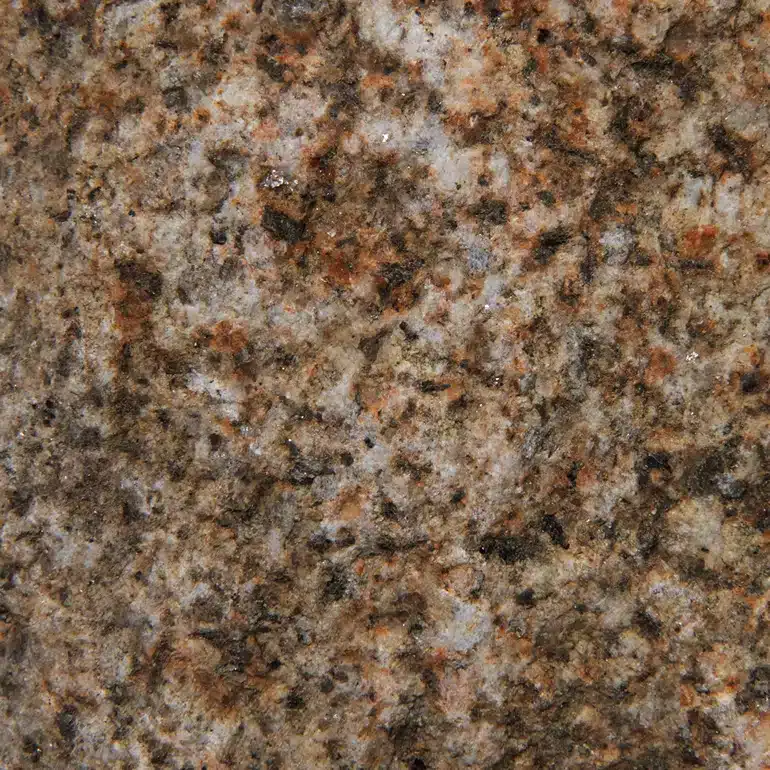
One of the pleasures of natural granite is that no two setts are quite alike. Cornish granite tends towards mixed greys and soft browns, with flecks of silver and the occasional warmer tone running through the batch. That natural variation is what gives a finished driveway or courtyard its depth and movement — a quality manufactured paving struggles to imitate. Tumbled setts read softer and more muted, while sawn faces show the stone's colour more crisply. If you want a particular balance of tones, or need to sit alongside existing stonework, it's always worth seeing a sample first; our team can help you gauge how a batch will settle once laid and weathered.
Think of the job the surface has to do
Before you look at colour or finish, think about what the paved area is for. A driveway that takes vehicles asks far more of the stone and the sub-base than a garden path or a decorative border. Driveways and trafficked areas need a deeper sett on a properly built foundation; paths, patios and edging can use a shallower depth. Exposed and coastal sites — common right across Cornwall and the South West — reward a hard, weather-resistant stone, which is exactly where granite comes into its own. Once you know the job, the shortlist narrows quickly.
Know your size & depth
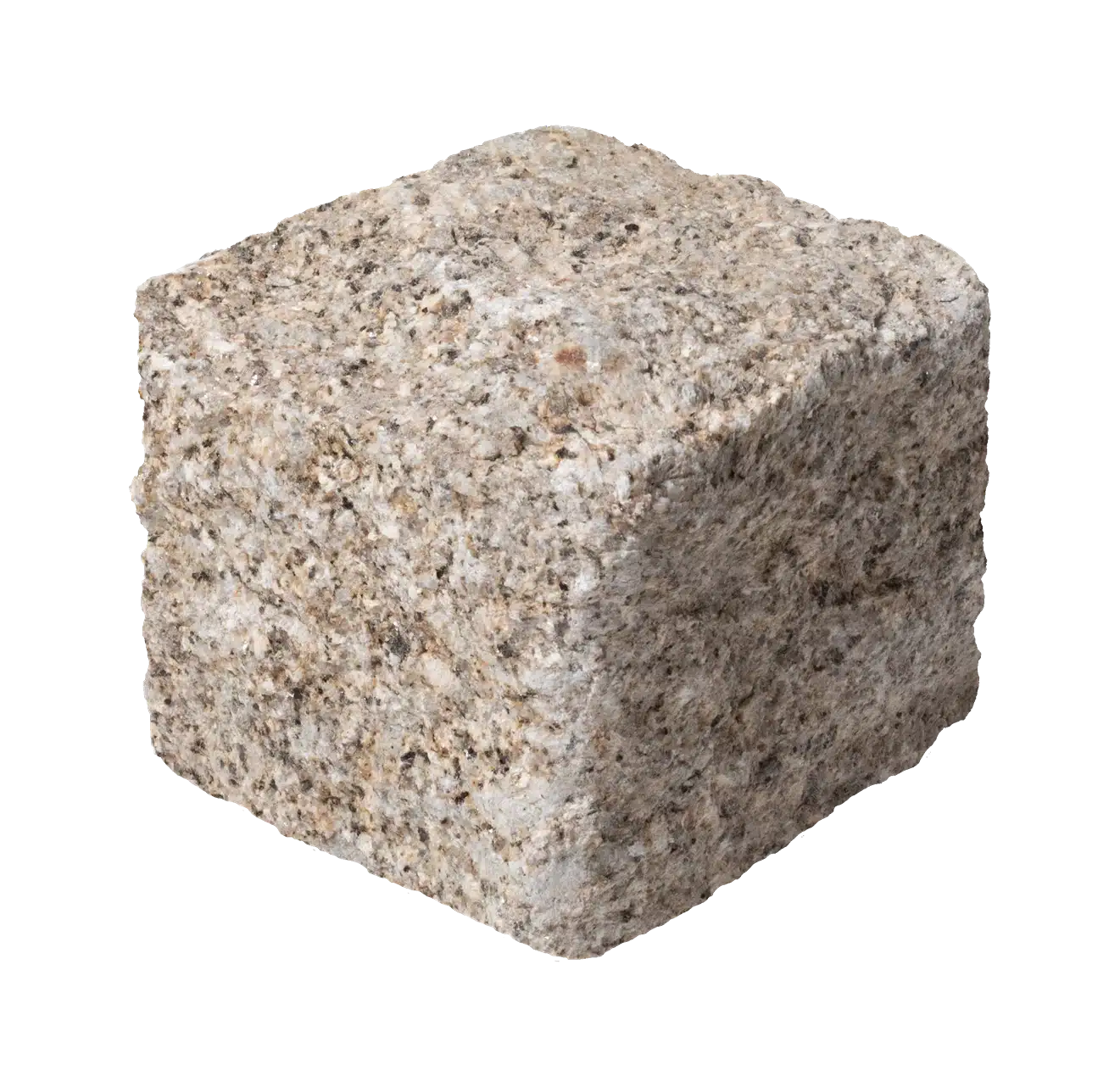
Granite setts come in a range of formats. Cube setts with faces around 100 × 100mm are the classic choice, alongside rectangular setts and larger plank-style formats for a more contemporary look. Depth matters as much as the face size: a deeper sett gives the strength needed for driveways and vehicle traffic, while a shallower sett is fine for pedestrian paths, patios and edging. If you're mixing setts across a scheme, keeping to compatible depths makes laying far simpler. Our team can advise on the right size and depth for your project.
Choose the right finish
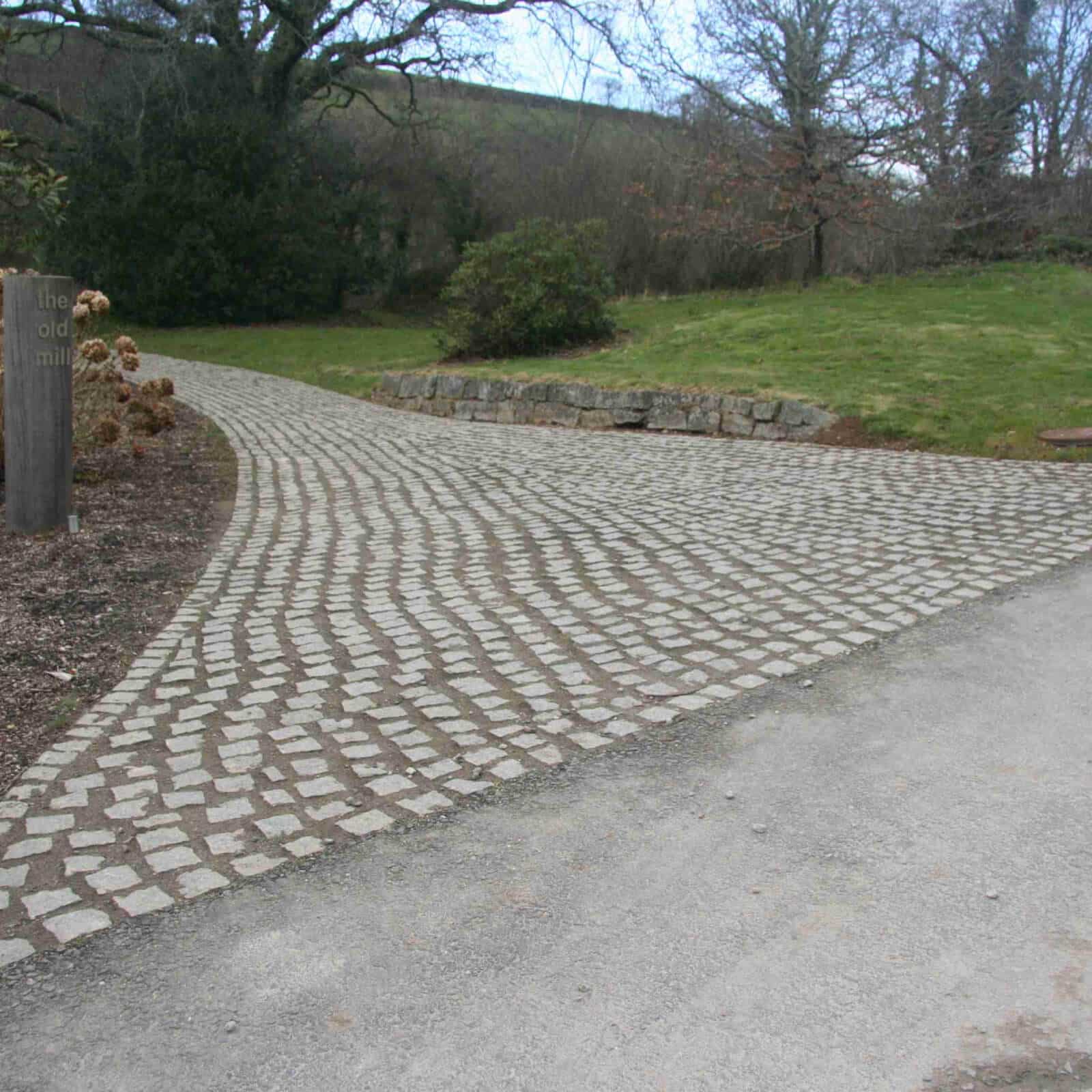
The finish changes the whole personality of a paved area, even within the same stone. Sawn setts have neat, consistent faces for tidy coursing and a clean, architectural result. Tumbled (or aged) setts are gently rumbled to soften their edges, giving a mellow, reclaimed look that suits cottages, period properties and rural gardens. Flamed and riven finishes add texture and grip — well worth having on slopes, ramps and surfaces that are often wet. If you're matching existing stonework, getting the finish right matters as much as matching the stone itself.
Think about the laying pattern
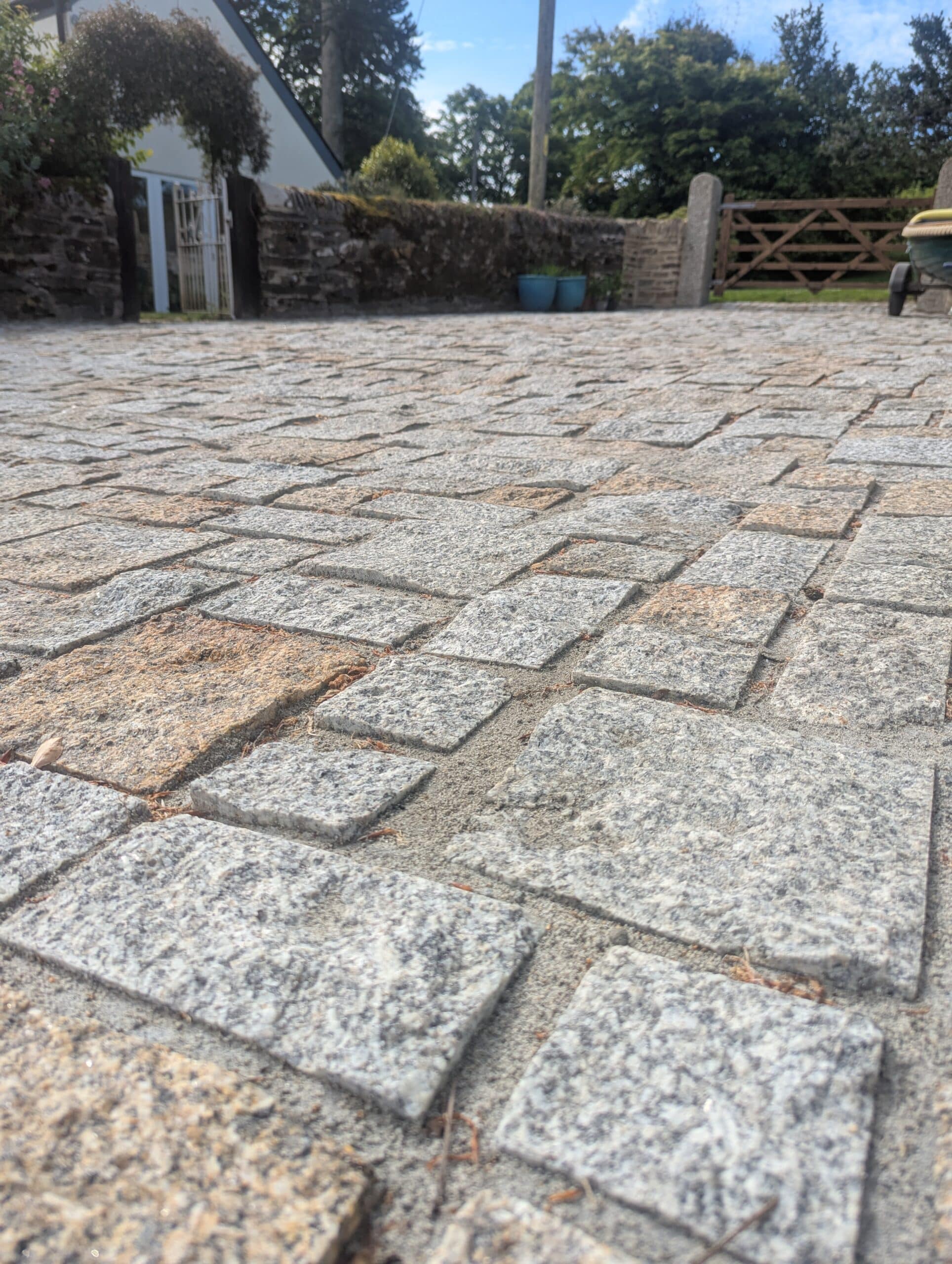
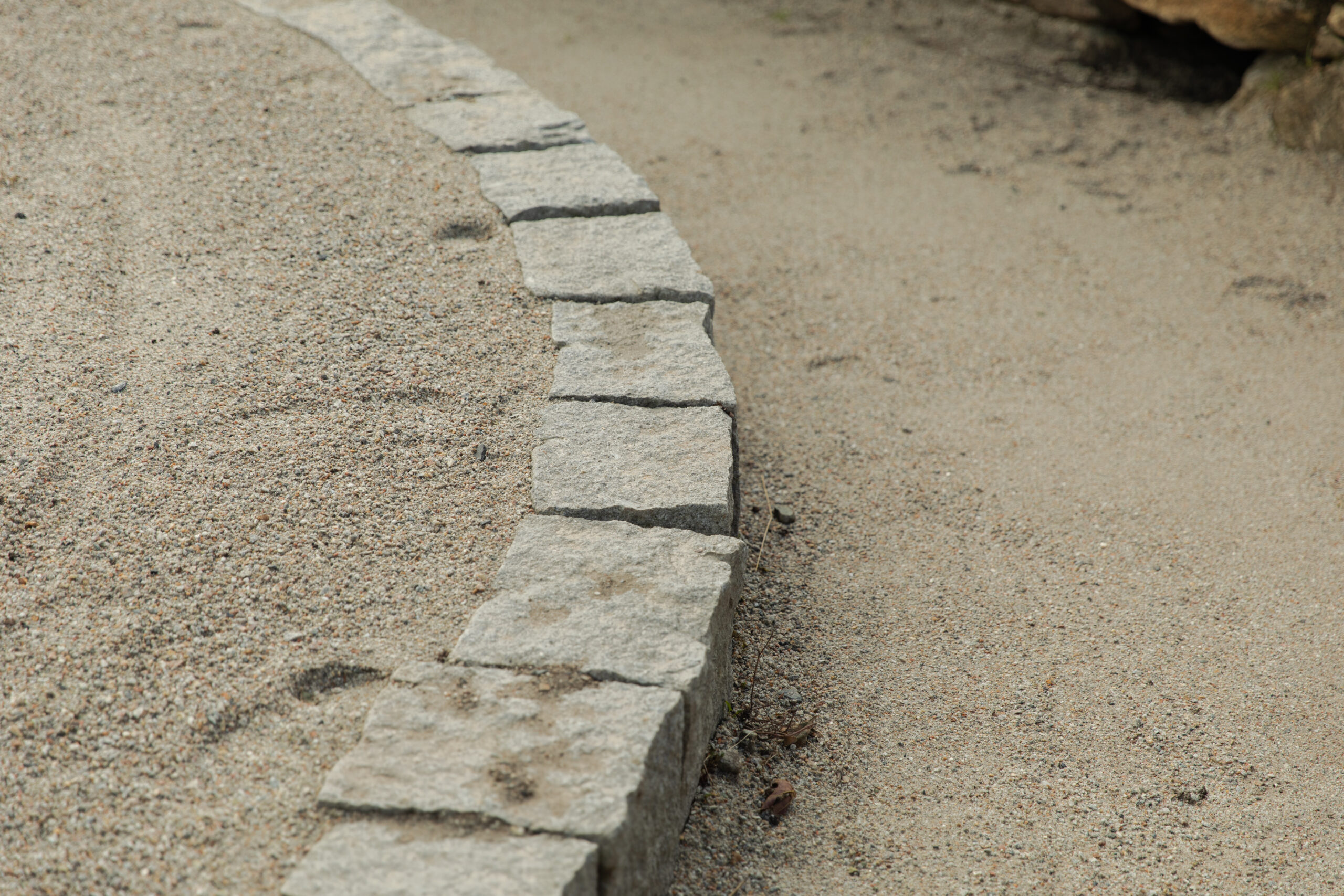
Setts are wonderfully versatile to lay. Coursed rows and running bond give an orderly, classic finish; herringbone locks the setts together and works beautifully on driveways; and fan-shaped ‘setts circles’ create a striking centrepiece for a courtyard. Setts also make elegant borders and bands to frame larger areas of paving or gravel. Bear in mind that the pattern affects both the look and the quantity you'll need, as more intricate layouts involve more cutting.
Calculating how much you need to order
Granite setts are usually sold by the square metre, the tonne or the pallet. As a rough guide, 100 × 100mm setts laid with a typical joint give in the region of 80 setts per square metre — but this varies with sett size, joint width and pattern, so treat it as a starting point rather than a firm figure. To estimate, measure the total area to be paved (length × width), then allow a little extra for cutting and wastage, especially for herringbone and curved layouts. Our team can confirm quantities, depths and lead times for you.
Laying and maintenance in brief
Setts are typically laid on a compacted sub-base and mortar or bedding layer, then jointed to suit the setting. A driveway needs a more substantial build-up than a path, so it's worth following current guidance or using an experienced installer for trafficked areas. Once down, granite setts need very little looking after — an occasional wash to keep them clean is usually all that's required, and any sealing is a matter of preference rather than necessity. For more detail, our technical datasheets in the Resources Hub set out specifications for each product.
Think about sourcing and sustainability
Where your stone comes from matters — for provenance, for carbon and for the look. Locally quarried Cornish granite travels shorter distances, supports regional craftsmanship, and carries a genuine sense of place that imported stone can't replicate. We're committed to sourcing responsibly, investing in our local economy and using business as a force for good, so you can choose beautiful, long-lasting setts with a clear conscience.
Still not sure? Ask an expert.
If you're weighing up options, you don't have to decide alone. Our in-house experts can help you match the right sett, choose a finish and get quantities right for your project. Browse our full granite setts range, or get in touch and we'll help you find the perfect stone — and deliver it across Cornwall, Devon and mainland UK.
09 Oct 2026
Share article:
Where quality meets sustainability
Our in-house experts, including a qualified geologist, can assist with matching and technical guidance. Trust us to source and deliver the perfect stone for your project.